Library
Welcome to the Library.
A place you can find things we write (white papers, articles), books we want to read when our Executive Functioning allows, and other things that tickle our brains.
It's part for you, part for us. Better out in the world than circulating around and around in our brains. We hope you find some inspiration here and that it helps you understand the work that interests us.
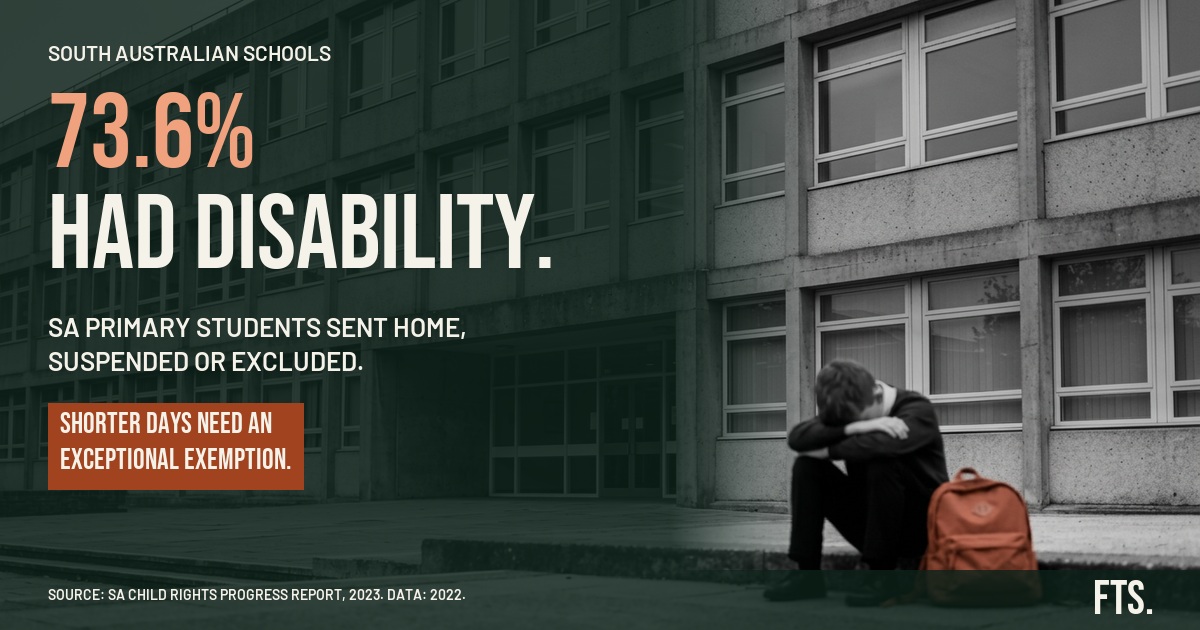
Parents of 250 South Australian Children Threatened With Prosecution. We Think the Process Is the Problem.
Why a child with a lifelong disability needs “exceptional circumstances” to go to school part time.
The One Plan and the part-time exemption set two different goals for the same child. Karen Cocks on how EVA finds where the path breaks, and the pilot FTS. wants to run with schools.
Authors
Karen Cocks
20 October 2026
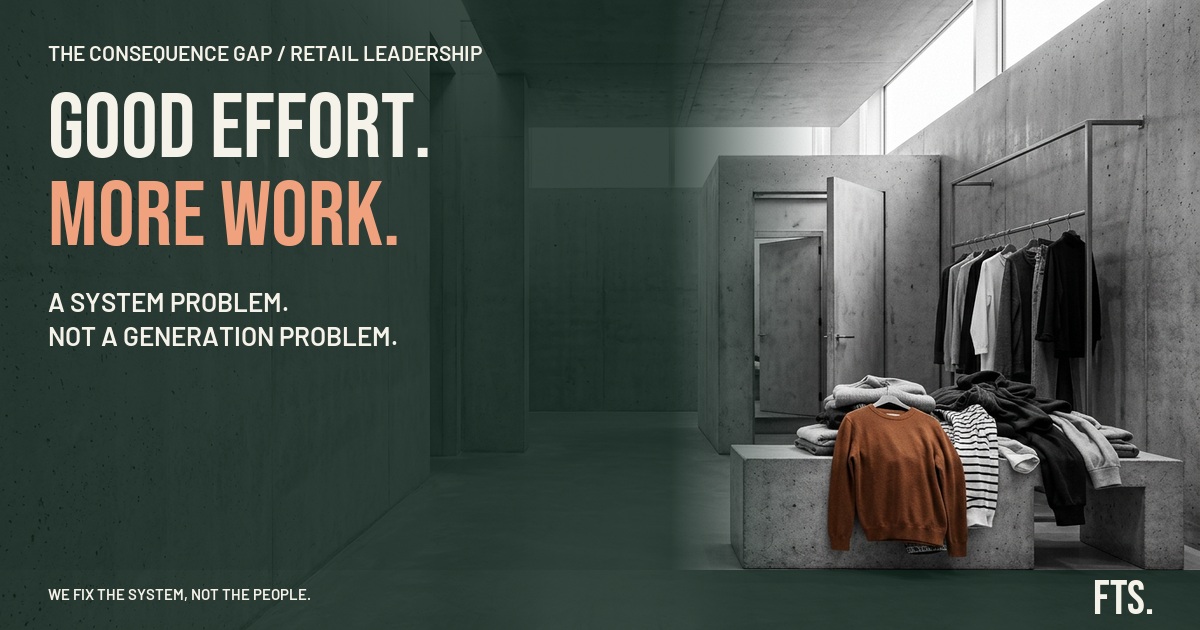
The Consequence Gap: Why ‘kids these days’ is a system problem, not a people problem
When good effort earns more work.
When good effort earns more work and poor effort goes unnoticed, the problem isn't a generation. Becky Hirst explores the consequence gap in retail and how FTS. closes it.
Authors
Becky Hirst
15 October 2026
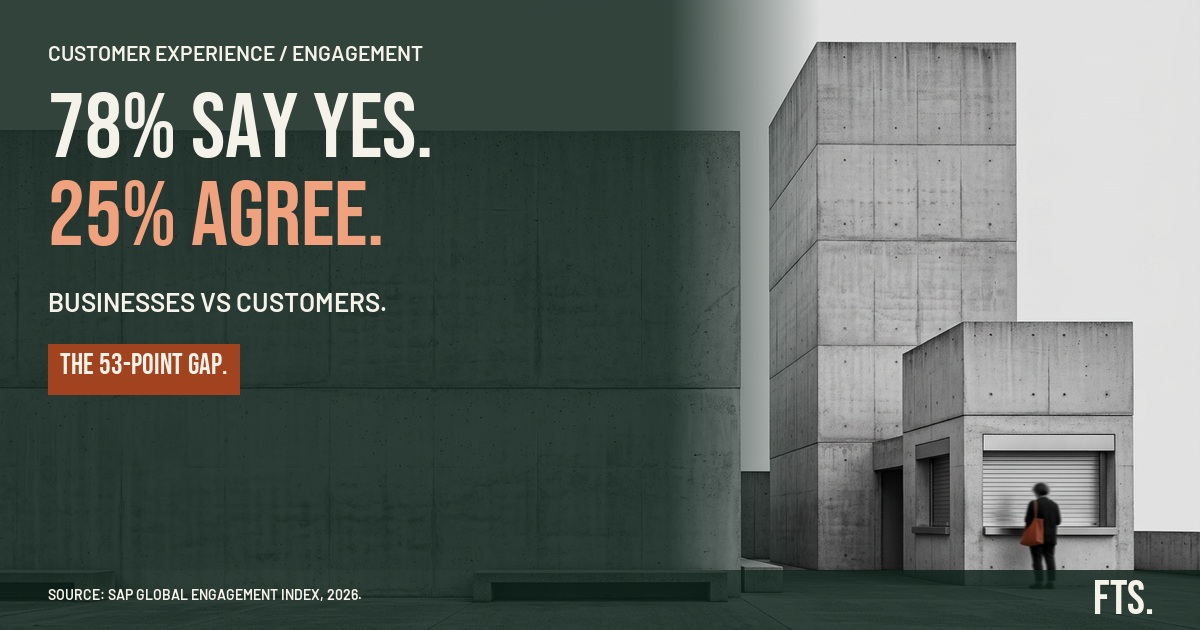
78% of Businesses Think They've Nailed Customer Experience. Their Customers Disagree.
The 53-point gap your CX dashboard isn't showing you.
78% of businesses believe they deliver a connected customer experience. Only 25% of customers agree. Introducing the FTS. Continuum of Customer Engagement.
Authors
Becky Hirst
14 October 2026
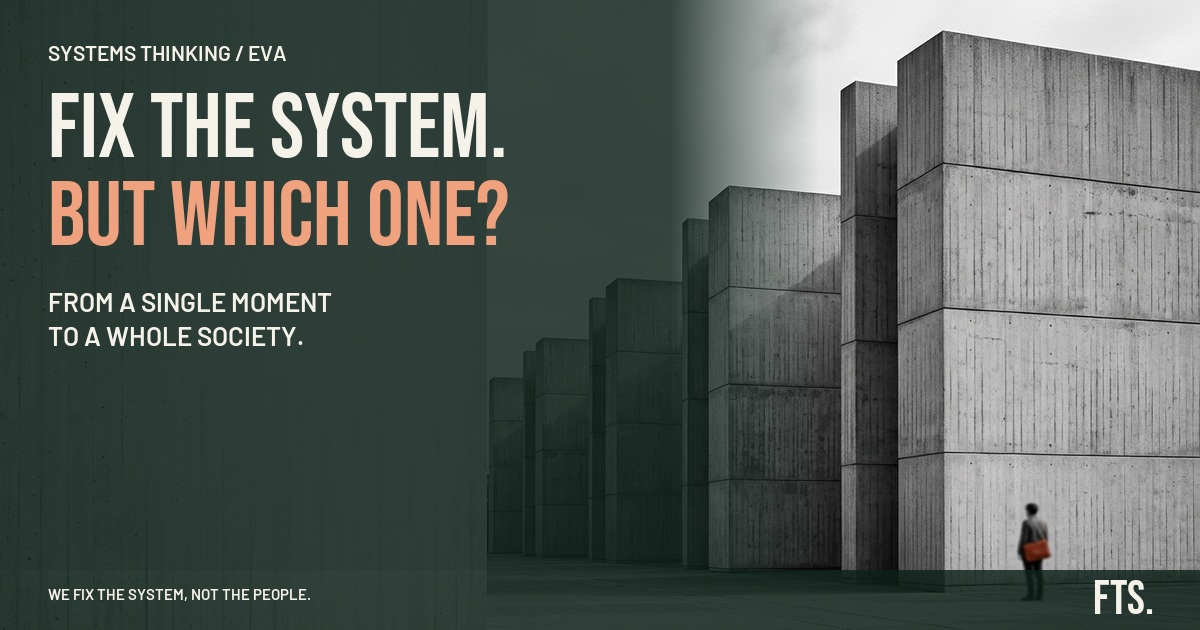
Fix the system, they said. But which one?
The five layers of a system.
From a coffee queue to a national health service: the five layers of a broken system, and how FTS. finds where the cause really lives.
Authors
Becky Hirst
10 October 2026
Your data is clean. Your system is absurd.
When systems don't connect, customers become the human middleware. Karen Cocks explores the work your data can't see, and why adding AI won't fix it.
Authors
Karen Cocks
9 October 2026
SA's Ramping Crisis Isn't About Ambulances
The ramp is the front door, and the back door is jammed.
Why a bigger version of the same system won't fix ramping
Authors
Becky Hirst
6 October 2026 · 5 min read
Extra Intelligence: Why the AI Conversation Needs Humans In It, Now
Systems don't fail on paper. They fail for people.
I'm a huge fan of AI. But if we don't involve the humans in our systems now, we're heading for a very big mess. Here's why I call it Extra Intelligence, and how EVA can help organisations find the balance.
Authors
Becky Hirst
4 October 2026
Four Weeks of Waiting. A 6-8% Increased Risk of Dying. How Did the NHS System Get Here?
When the wait becomes part of the clinical risk.
A personal account of cancer diagnosis delays, the NHS professionals working inside a failing system, and what patient-centred redesign would take.
Authors
Becky Hirst
19 September 2026
Adelaide's Homelessness Crisis Isn't About Lack of Homes
The system is failing. Not the people. Not the effort. The system itself.
Why funding and resources alone won't fix broken systems, and what Adelaide's homelessness emergency shows us about the way organisations misdiagnose their real problems.
Authors
Becky Hirst
18 September 2026
Burnout Is Costing Singapore S$95 Billion a Year. Here's What That Means for Your Business.
Burnout is not a happiness problem. It is a balance-sheet problem.
What the S$95 billion cost of disengagement reveals about organisations treating the symptoms while leaving the systems that cause them unchanged.
Authors
Becky Hirst
17 September 2026
Psychosocial Safety is Hazard Management
Why identification is the gap, and what it takes for frontline leaders to close it
Organisations can have strong policies and sound risk frameworks, but they can only manage the hazards they know about. This paper examines whether psychosocial risk management is weakest at the point of identification, before assessment or control can occur, and asks what happens when frontline leaders lack the capability, authority or escalation pathway needed to act.
Authors
Becky Hirst and Karen Cocks
September 2026
The Evolution of the Perpetual Cycle™
Pattern, iteration, and how neurodivergent thinking actually works with AI
How the framework came together through months of voice notes, a sketch on notebook paper, a clock face that had to be taken back out, and Karen's blunt sensory feedback. A story about noticing patterns, listening to each other, and using AI as a thinking partner rather than a shortcut.
Authors
Becky Hirst
The Dashboard Blind Spot
Why systems designed to protect vulnerable customers only see the people who ask for help
A 99% adoption rate and a 25% exclusion rate can both be true of the same institution at the same time, because they measure two entirely different populations. This paper tests that idea against banking regulation and a very public airline incident, and asks what changes once an institution accepts that its own success metric was never designed to see the people it fails.
Authors
Becky Hirst and Karen Cocks
The Portal Toll
Why moving service behind a login screen shifts the admin onto the customer, and locks part of the community out completely
When an institution replaces a staffed channel with a self-service portal, the efficiency the business books is not the efficiency the customer experiences. This paper tests that idea against two ordinary transactions and the growing literature on administrative burden, and asks what an institution owes a customer once it has put them to work.
Authors
Becky Hirst and Karen Cocks
The Sterile Border
A checkpoint engineered for reassurance, unaudited for risk
Passport control counts every traveller who clears the gate and every minute spent in the queue, but has no measure for whether the encounter detects risk or simply performs reassurance at a cost the airport is already paying. This paper tests whether the sterility of the checkpoint is evidence of stronger security, or a habit the industry has stopped questioning.
Authors
Becky Hirst and Karen Cocks
The Perpetual Cycle™
For brilliance and burnout in high achieving neurodivergent women
Why the brilliance and the burnout are not two separate problems, and what six stages, checked against real research, say about the space between them: Ideas, Create, Impact, Push, Crash, Reset, then round again.
Authors
Becky Hirst and Karen Cocks
8 September 2026

Get in touch
Want a briefing on this research?
Get in touch and we'll point you to the right person.
Make a library enquiry